New Kuching International Airport (NKIA) – Sarawak’s Vision for a Regional Aviation Hub and Low-Carbon Aerotropolis.
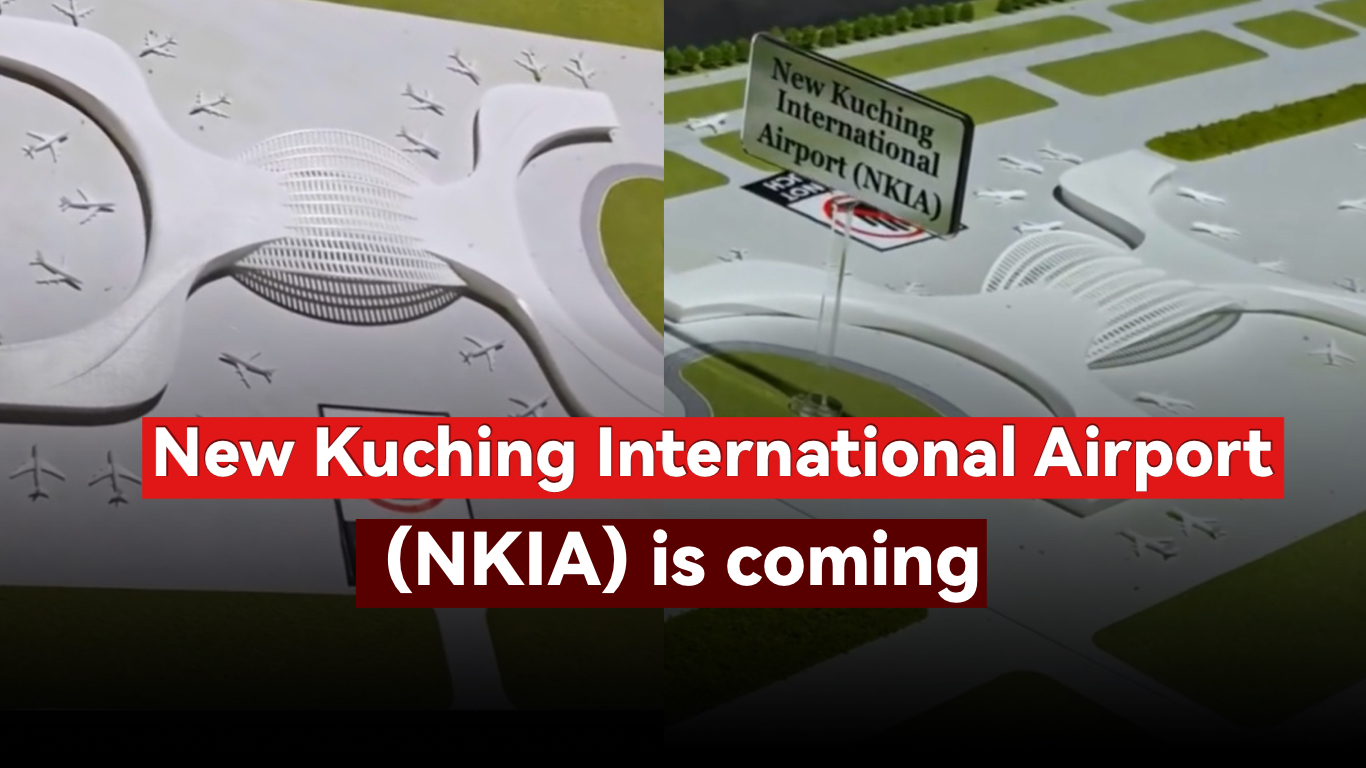
Did you know? Sarawak is planning to build a brand-new New Kuching International Airport (NKIA) at Tanjung Embang, a transformative project that aims to position the state as a leading regional aviation hub while driving long-term economic growth.
More than just an airport, NKIA forms part of an integrated low-carbon hub master plan that also includes a deep-sea port, logistics facilities, and green industries, creating a modern aerotropolis designed for the future.
⸻
Project Overview
* Project Name: New Kuching International Airport (NKIA)
* Proposed Location: Tanjung Embang, Sarawak
* Recommended Site: Selected following a feasibility study conducted by Netherlands Airport Consultants (NACO)
* Development Vision: Regional aviation hub and low-carbon aerotropolis
* Current Status: Sarawak’s Ministry of Transport has submitted the development proposal to the Federal Ministry of Transport for approval.
* Primary Objectives:
* Increase passenger and cargo capacity
* Improve domestic and international connectivity
* Support sustainable economic growth
* Strengthen Sarawak’s position in regional aviation
⸻
A New Low-Carbon Aerotropolis
NKIA is envisioned as much more than an airport. It will serve as the centrepiece of a large-scale integrated development that combines transportation, logistics, trade, and sustainable industries.
The master plan includes:
* A new international airport
* A deep-sea port
* Modern logistics and cargo facilities
* Green industrial parks
* Commercial and business developments
* Sustainable, low-carbon infrastructure
Together, these components are expected to create a highly connected ecosystem for aviation, maritime trade, logistics, and industry.
⸻
Why Tanjung Embang?
Following an extensive feasibility study by Netherlands Airport Consultants (NACO), Tanjung Embang was identified as the preferred location due to several strategic advantages:
* Sufficient land for long-term expansion
* Strategic location for future aviation growth
* Potential integration with a deep-sea port
* Strong connectivity for logistics and industrial development
* Alignment with Sarawak’s long-term urban and economic planning
⸻
Key Development Components
1. New International Airport
* Modern passenger terminal
* Expanded aircraft capacity
* Improved operational efficiency
* Designed to accommodate future passenger and cargo growth
2. Deep-Sea Port
* Enhanced maritime connectivity
* Greater international trade capacity
* Integration with airport cargo operations
* Improved supply chain efficiency
3. Logistics Hub
* Advanced warehousing and distribution facilities
* Air-sea cargo connectivity
* Support for regional and international logistics
* Attraction of global logistics operators
4. Green Industrial Zone
The surrounding area is planned to accommodate:
* Green manufacturing
* Clean energy industries
* High-value technology investments
* Sustainable industrial developments
* Low-carbon economic activities
⸻
Decentralised Development Model
According to Sarawak’s Minister for Transport, Dato Sri Lee Kim Shin, the state views the decentralised approach to NKIA as a more collaborative development model that allows greater state participation in planning and implementation.
The approach is intended to ensure the project aligns with Sarawak’s long-term aviation strategy while supporting broader economic development and regional connectivity.
⸻
Strategic Significance
The NKIA project is expected to:
* Position Sarawak as a regional aviation hub
* Expand international passenger and cargo traffic
* Improve connectivity across ASEAN and beyond
* Strengthen logistics and supply chain capabilities
* Attract domestic and foreign investment
* Support tourism and business travel
* Accelerate the development of green industries
* Enhance Sarawak’s long-term economic competitiveness
⸻
Looking Ahead
The New Kuching International Airport represents one of Sarawak’s most ambitious infrastructure projects to date.
By integrating an international airport with a deep-sea port, logistics facilities, and sustainable industrial development, NKIA has the potential to reshape the state’s transportation network and economic landscape for decades to come.
If approved and successfully implemented, Tanjung Embang could become one of Southeast Asia’s newest low-carbon aviation and logistics hubs, supporting Sarawak’s vision of becoming a globally connected, sustainable economy.