Yunnan Successfully Grows Durian — A New Beginning for China’s Durian Industry
China is now producing its own durians!
Can Malaysian consumers expect cheaper durians?
Will durian prices drop in the future?
And how will this affect Malaysia?
Did you know?
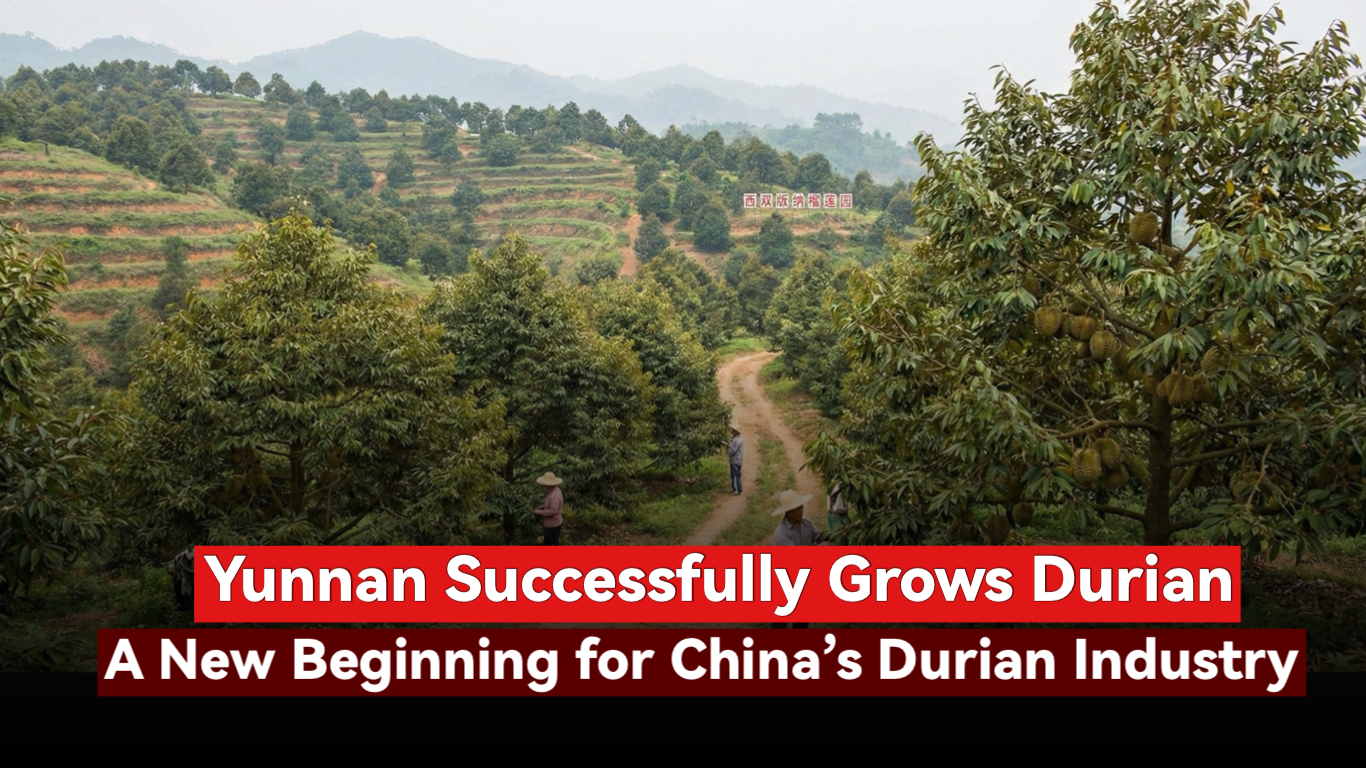
Recent reports revealed that Yunnan has successfully grown durians, with one farmer producing 16 healthy fruits from a tree he planted years ago.
China being able to grow durian is more than just a headline — it could reshape the entire Asian durian market.
With China moving toward local cultivation, the biggest question among Malaysians is:
“Does this mean we can finally enjoy cheaper durians?”
Is this news an opportunity or a threat?
Let’s break it down.
⸻
🔍Why Is Yunnan’s Durian Breakthrough Important?
01. A Successful Case
Back in 2010, a farmer in Xishuangbanna, Yunnan casually planted a durian seed.
This year, the tree produced 16 fruits.
Since durian takes 7–10 years to mature, successful fruiting signals:
Yunnan’s climate is capable of supporting durian growth.
02. Climate Similar to Southeast Asia
Xishuangbanna shares similar climate patterns with northern Thailand and northern Vietnam — warm, humid, and rainy.
Because of this, varieties like Monthong, Black Thorn, and Musang King have shown better-than-expected growth in trial plantings.
03. Growing Plantation Scale
Durian plantation areas in Yunnan have exceeded 7,000 mu (about 470 hectares) and continue to expand.
Some farms practice durian + jackfruit intercropping to maximize land productivity and reduce risk.
04. A National Strategic Crop
China consumes over 1.5 million tonnes of durians yearly — the world’s largest consumer and importer.
Successful trial cultivation indicates that China aims to reduce import reliance and strengthen food security.
⸻
🏞Industrial Positioning
Yunnan positions durian as a premium, high-value crop, with goals to:
• Advance agricultural technology
• Develop a high-value tropical agriculture chain
• Reduce dependency on imported produce
• Increase China’s global presence in the durian industry
However, experts also acknowledge:
Yunnan is still in the “0 to 1 breakthrough stage”, and large-scale, high-quality production requires time and refinement.
⸻
🌏Will Durians Become Cheaper?
(Here’s the honest answer for Malaysian consumers)
✔ Short Term (1–5 years)
No.
Yunnan’s durian production is still experimental.
China will continue relying heavily on imports from Malaysia, Thailand, and Vietnam.
Market prices will remain largely unchanged.
✔ Medium Term (5–10 years)
Prices may become more stable, but won’t suddenly crash.
If Yunnan achieves consistent production, China may reduce some import volume, affecting:
China’s domestic prices — not Malaysia’s.
✔ For Malaysian Consumers
Local durian prices depend mainly on:
• Weather
• Harvest season
• Varieties (Musang King / Black Thorn / D24)
• Export demand
Yunnan-grown durian → only a minor influence on Malaysian prices.
In the long run, Malaysia might see:
• Slightly more stable pricing
• Slight reduction in price volatility
but no major price crash.
⸻
🇲🇾Impact on Malaysia: Pros & Cons
✅ Pros
1. Malaysia keeps the “premium durian” advantage
Even if China can grow durians, reproducing Malaysia’s unique Musang King or Black Thorn flavour profile is extremely difficult.
Malaysia retains the premium market position.
2. Opportunities for seedling, grafting & tech exports
China may rely on Southeast Asia for expertise, genetics, and planting technology.
3. Durian popularity boosts tourism & culture
More Chinese durian lovers = more travelers visiting Malaysia for the “authentic taste”.
⸻
❌ Cons
1. Rising competition in the mid- to low-tier durian market
If China scales up production, varieties like Monthong may face stronger competition.
2. Reduced import demand → export value may be affected
Thailand will feel this impact the most, followed by Vietnam.
Malaysia is less affected since it focuses on high-end durians.
3. Global price structure may shift
More supply → lower average global market prices.
⸻
🧭Conclusion: Will This Affect Malaysia?
Short term: almost no impact.
Long term: increased competition — but Malaysia still has natural advantages.
Yunnan’s entry into the durian world is more of a market expansion than a replacement.
Malaysia remains:
“the origin of the strongest, richest, and most iconic durian flavours.”
⸻
❓What do you think?
Do you believe China’s durian industry will boom in the next 10 years?
Will Malaysian durians become more affordable in the future?