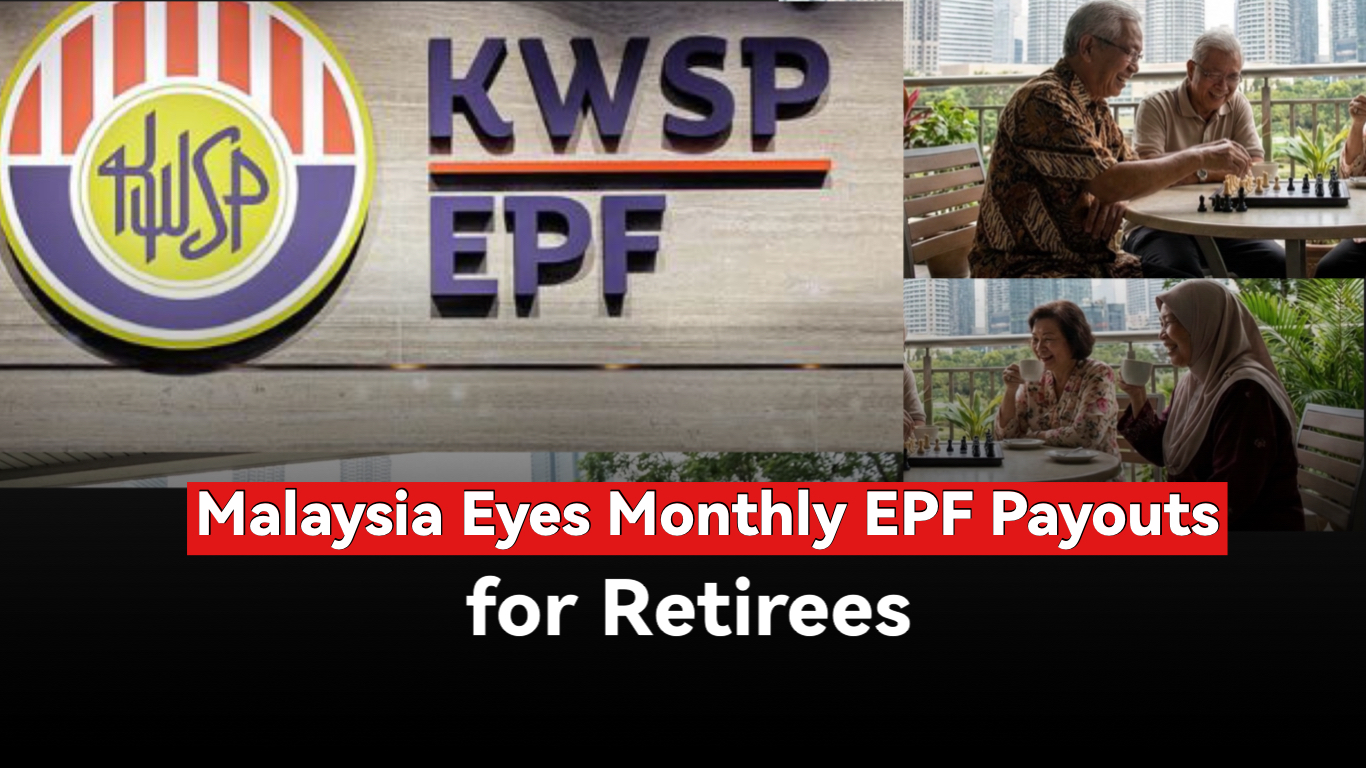
Malaysia Considers Monthly EPF Payouts — A Major Shift in Retirement Planning
Did you know?
The Malaysian government is seriously studying a reform that could affect the retirement life of every working Malaysian —
shifting the Employees Provident Fund (EPF / KWSP), which is currently withdrawn mostly as a lump sum, toward a monthly retirement income mechanism.
This is not just a policy tweak — it’s a fundamental rethink of how we live after retirement.
⸻
EPF Reform Concept — Core Ideas
Policy Background
• Initiated by: Malaysian Government / Ministry of Finance
• Scheme: Employees Provident Fund (EPF / KWSP)
• Proposed change: From lump-sum withdrawals → add a monthly retirement income option
• Current stage: Research & discussion (not yet implemented)
• Objective: Long-term retirement security reform (not a short-term measure)
The government’s main concern:
👉 Many retirees quickly spend their EPF savings after withdrawal.
⸻
Why Consider “Monthly Payouts”?
Current reality
• Most retirees withdraw their EPF at age 55 / 60 as a lump sum
• Lack of financial planning leads to savings being depleted within a few years
• No stable cash flow in old age
• Living, medical, and inflation pressures increase over time
• More reliance on children or social assistance
Government goal:
Not just to “give money,” but to ensure you still have funds at age 70 or 80.
⸻
Proposed New Mechanism (Simplified)
Dual-track concept (under study)
Future EPF may serve two purposes:
1️⃣ Flexible Savings
• Similar to current EPF
• Withdraw according to existing rules
• For emergencies, investments, personal use
2️⃣ Income Savings
• Designed specifically for retirement
• Paid monthly after retirement
• Functions like a pension
• Continues until the balance runs out
Key point: This adds choice, not immediate compulsory change.
⸻
Will It Affect Current Members?
Official information so far:
• Existing members: Withdrawal rights remain unchanged
• Lump-sum withdrawals at 55 / 60: Still allowed
• New system likely:
• Optional for current members
• Default for new members in the future
In short: it’s a gradual transition, not an overnight change.
⸻
Public Reaction: Pros and Cons
Supporters say:
• Monthly income is more reassuring
• Avoids spending the lump sum too quickly
• Helps cope with longevity and inflation
• Reduces elderly poverty
Critics worry:
• Lose freedom to withdraw large sums
• Younger workers prefer to invest themselves
• Don’t want money “locked up”
• Concerned policy may eventually become mandatory
This debate reflects different generations’ understanding of financial security.
⸻
The Real Significance of This Reform
System perspective:
• EPF shifts from a savings scheme toward a retirement income scheme
National perspective:
• Reduces future social welfare burden
• Addresses population aging
• Builds a more sustainable retirement system
Personal perspective:
• You’re not just saving money
• You’re planning your life after retirement
⸻
Not Unique to Malaysia
Globally, monthly retirement payouts are a mainstream trend.
Countries with similar pension systems include Singapore, USA, UK, Japan, Canada, and Germany.
Common features:
• Lump-sum withdrawal of the entire pension is restricted
• Pensions are paid monthly
• Purpose:
👉 Prevent early depletion of retirement funds
👉 Ensure stable cash flow in old age
Malaysia’s current discussion is a step toward these mature retirement systems.
⸻
Current Status
Reports indicate that Malaysia may implement monthly EPF payouts mainly for new members, while existing members are largely unaffected.
⸻
Summary
The idea of monthly EPF payouts is not yet official policy —
it represents a major shift in retirement planning that is currently being explored.
It won’t instantly change your EPF, but it may gradually reshape how the next generation of Malaysians retires.
Do you support EPF being paid out monthly, or do you prefer keeping the freedom to withdraw a lump sum?