Thai Boy Band Controversy in Miri: Pros, Cons, and Societal Debate
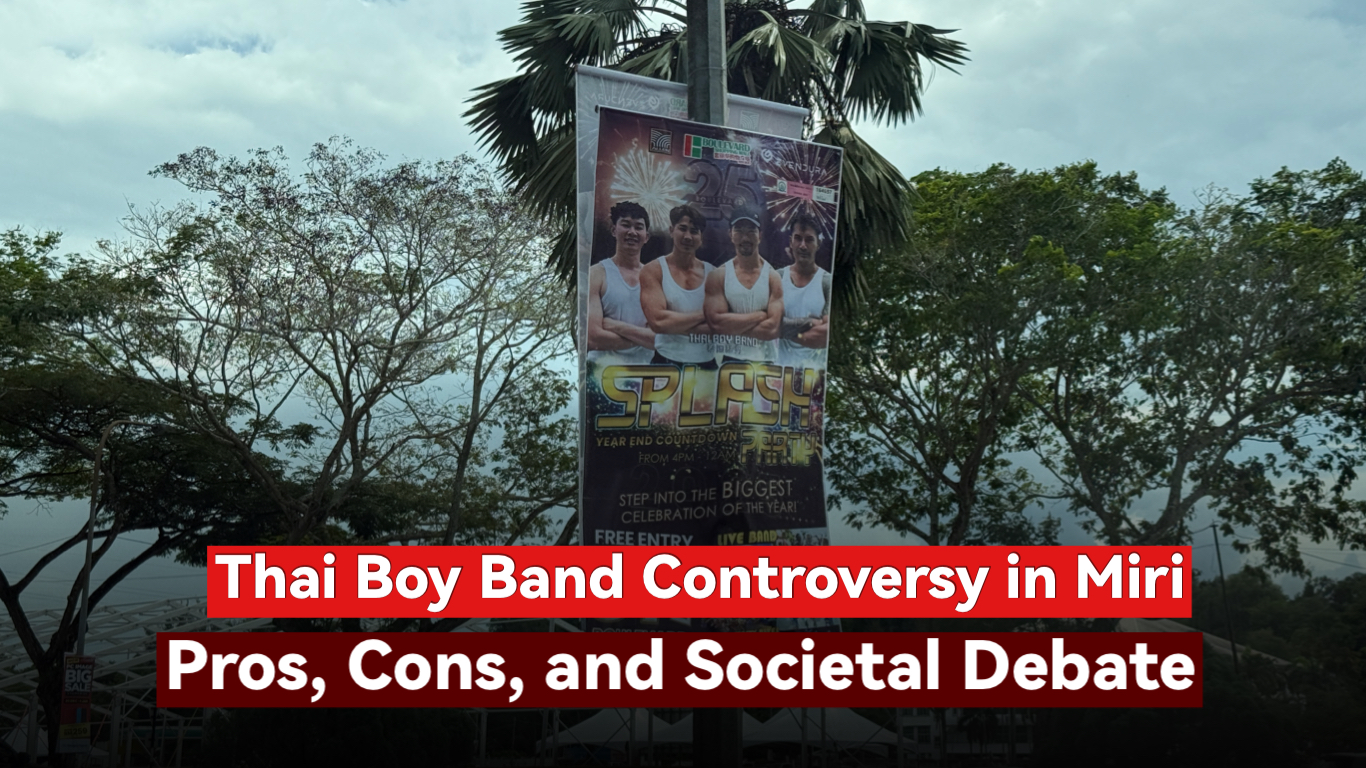
The originally planned New Year’s Eve “Foam Party” in Miri, featuring a performance by a Thai boy band, has sparked controversy. Ultimately, the much-anticipated performance was canceled.
The Miri’s “Federation of NGOs,” made up of 10 registered indigenous associations, publicly opposed the event, citing potential impacts on local culture, religion, social values, and youth. The incident quickly polarized public opinion, sparking broad discussions on cultural openness, personal choice, and societal boundaries.
This controversy is no longer just about whether a single performance is appropriate; it reflects how Miri positions itself and defines its values in a multicultural society.
⸻
18 Potential Benefits of the Thai Boy Band Performing in Miri
1. Attracts tourists, boosting visitor numbers.
2. Stimulates the local economy—restaurants, hotels, and transportation benefit.
3. Creates short-term jobs (stage, sound, security personnel).
4. Increases Miri’s city exposure and recognition.
5. Offers more diverse entertainment for New Year’s Eve.
6. Promotes international and regional cultural exchange.
7. Participation is voluntary, respecting individual choice.
8. Meets young people’s demand for entertainment.
9. Showcases Miri’s ability to host large events.
10. Builds local experience in event planning and execution.
11. Boosts nighttime economy, adding vibrancy to the city.
12. Reduces entertainment spending leaking to other cities.
13. Reflects social diversity and inclusiveness.
14. Encourages rational discussion about cultural boundaries.
15. Legal if permits are obtained.
16. Helps society distinguish personal values from public policy.
17. Tests the city’s maturity in handling disagreements.
18. Returns cultural and entertainment choices to individuals.
⸻
18 Potential Drawbacks
1. May trigger strong backlash over religious and cultural values.
2. Deepens divisions between social groups and values.
3. Viewed by some as conflicting with local moral standards.
4. Raises parental concerns about youth values.
5. Causes public unease about content appropriateness.
6. Can be politicized and manipulated in public discourse.
7. Increases management pressure on law enforcement.
8. Poses reputational risks for government and organizers.
9. Perceived as sexually suggestive or inappropriate.
10. Blurs the line between cultural exchange and commercial entertainment.
11. May harm city perception among conservative groups.
12. Mismanagement could undermine social harmony.
13. Religious groups may see it as challenging faith boundaries.
14. Sparks questions about the proper use of public resources.
15. Intensifies online disputes and social tension.
16. Raises potential security and order risks.
17. Impacts the city’s long-term cultural development.
18. Keeps the city embroiled in ongoing debates over values.
⸻
Conclusion
The controversy over the Thai boy band in Miri is not simply an entertainment issue—it is a microcosm of how diverse values coexist in society.
Supporters emphasize freedom of choice, economic benefits, and cultural openness; opponents focus on religious beliefs, social morality, and youth impact.
In a world where globalization and local values coexist, the real challenge is not just whether to allow or ban an event, but whether society has mature mechanisms to respect differences while clearly defining public boundaries.
The questions this incident raises may be more significant than the answers:
What kind of city does Miri want to be?
Some netizens comment that it is becoming similar to West Malaysia.
Where do you stand—support or oppose the Thai boy band performing in Miri?