Slow internet in Sarawak is more than an inconvenience—it is a long-standing development issue that affects residents and visitors alike. Tourists often find that connectivity at some attractions is poor, while locals experience slow video loading, unstable calls, disrupted online payments, and frequent disconnections. In short, it’s not faulty devices—the network itself is slow.
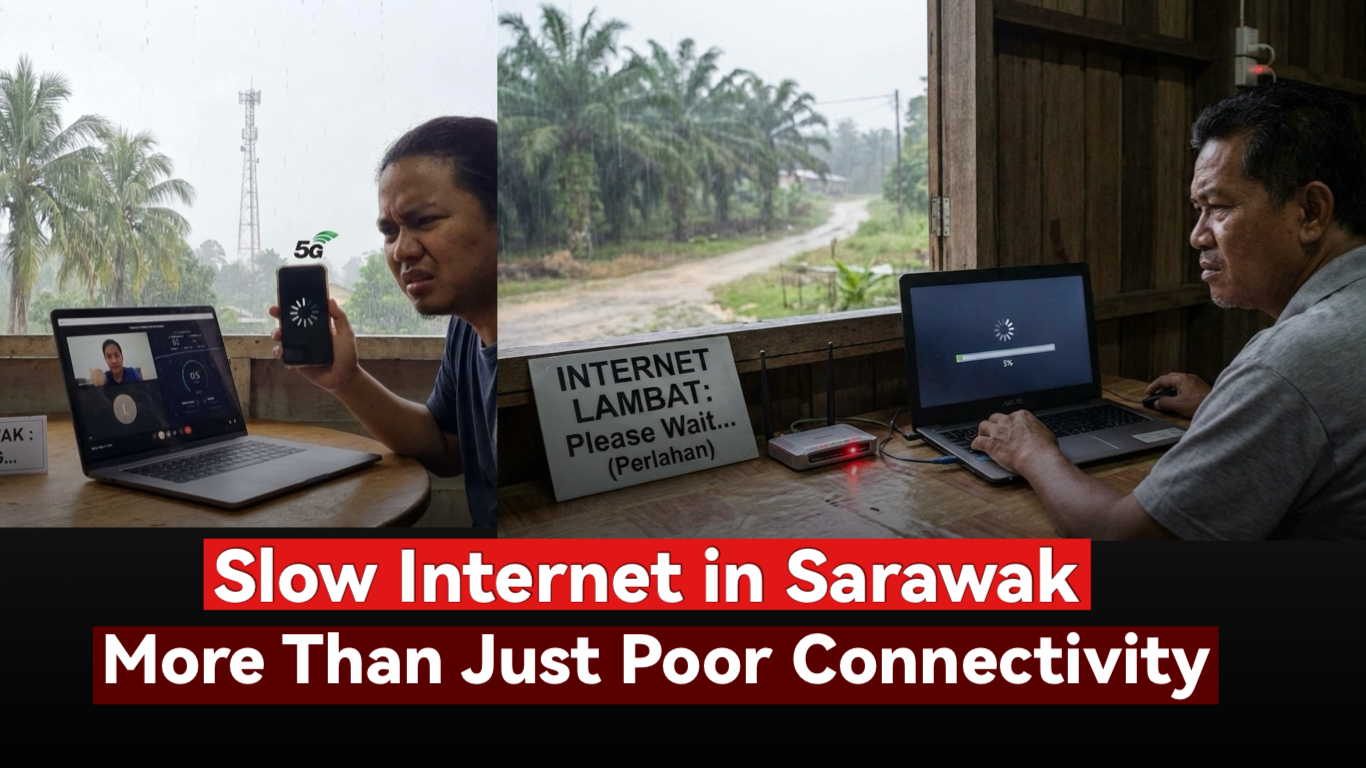
This problem goes beyond technology. Internet speed is closely linked to the urban–rural divide, economic growth, education equality, and Sarawak’s digital future.
Key issues include:
• Unstable speeds, especially at night
• Patchy 4G/5G coverage
• Rural areas relying on weak signals
• Frequent disruptions to online learning and video meetings
• A clear speed gap compared to Peninsular Malaysia
For many Sarawakians, simply getting connected is already a challenge; smooth connectivity is a luxury.
Why is the internet slow?
1. Geography: Sarawak’s vast size, low population density, scattered rural settlements, and difficult terrain make infrastructure costly with low commercial returns.
2. Uneven investment: Past telecom investments prioritized dense urban areas, mainly in Peninsular Malaysia, leaving East Malaysia—especially rural Sarawak—behind.
3. Infrastructure complexity: Reliable internet requires not just towers, but fiber backbones, data routes, backhaul networks, power supply, and maintenance. Missing any link results in slow speeds.
4. Centralized decision-making: Telecom planning has long been centralized in Kuala Lumpur, often diluting Sarawak’s specific needs under national averages.
Impact of slow internet:
Internet is now basic public infrastructure. Poor connectivity affects students, remote workers, SMEs, e-commerce, digital government services, healthcare, agriculture, youth employment, and entrepreneurship. Simply put, slow internet slows development.
What is Sarawak doing?
The Sarawak government has begun taking a more proactive role, treating digital infrastructure as part of its development sovereignty. Efforts include building a state fiber backbone, expanding rural broadband and satellite coverage, renegotiating coverage obligations with telecom companies, and reducing reliance on federal timelines. The goal is not just to catch up, but to plan based on Sarawak’s real needs.
The bigger picture:
Internet today is like water and electricity—it determines access to education, business opportunities, youth retention, and whether rural areas remain marginalized. Without stable connectivity, concepts like the digital economy and smart cities remain slogans.
Core message:
Sarawak does not reject development; its development pace has long been underestimated. Slow internet is not a sign of backwardness, but the result of imbalanced resource allocation and decision-making.
Many netizens note that the issue is no longer limited to rural areas—urban networks are also increasingly congested. The key question now is whether connectivity challenges will become the next catalyst for Sarawak’s push toward greater digital autonomy.